
The confirmed cases climbed to 571 mostly from the city of Wuhan with 17 deaths so far. The Wuhan government required all people in public places such as hotels, restaurants, cinemas, parks, shopping centres and public transports to wear masks to prevent the spread of the virus, according to an announcement on Wednesday night. The rule took effect immediately.

Wang Guangfa, a respiratory expert from Peking University First Hospital, warned that Beijing may experience a spike in severe COVID-19 cases over the next fortnight.
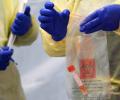
Bayannur, Inner Mongolia Autonomous Region, announced a level III warning of plague prevention and control, state-run People's Daily Online reported. The suspected bubonic plague case was reported on Saturday by a hospital in Bayannur.

China's top respiratory disease expert Zhong Nanshan warned of a small COVID-19 spike in the winter and reminded the elderly and vulnerable populations to get vaccinated as soon as possible, state-run Global Times reported.

Even when China's widely-publicised exchange with the World Health Organisation (WHO) in response to the queries over the reports of surging cases of mycoplasma pneumonia and influenza flu triggered the worldwide alert, including in India, China said the spike in respiratory diseases was due to an 'immunity gap'.

It is certain that the Chinese government was 'under-prepared' as it decided to end its zero-COVID policy abruptly after people held protests across the country, The Hong Kong Post reported.

Although China still faces the threat of new outbreaks due to local community transmissions or from imported cases, the country's capability to contain the COVID-19 has been honed, thanks to its experience in battling the virus for months.

The overall confirmed cases on the mainland have reached 81,708 by Sunday, including 1,299 patients still being treated, 77,078 patients discharged after recovery, and 3,331 people died of the disease.

The National Health Commission (NHC) said that 32 new confirmed COVID-19 cases were reported in the country on Thursday of which 28 were domestically-transmitted and four were imported. Of the domestically-transmitted cases, 25 were reported in Beijing, two in Hebei province and one in Liaoning province, it said in its daily report.

The new outbreak may be the greatest wave of illnesses ever recorded since China's stringent zero-Covid programme was abandoned last winter, which resulted in up to 85 per cent of the population being sick at the time.

In a bid to stem the spread of the contagion, the authorities in Beijing have conducted the nucleic acid test on 29,386 people who had visited the Xinfadi wholesale market since May 30, Gao Xiaojun, spokesman for the Beijing Health Commission, said on Monday. The market became a hotspot after it reported several new COVID-19 cases. Out of all the samples, 12,973 came negative and the rest are awaiting results, Gao told the media.
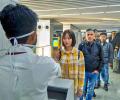
Several countries started screening travellers coming from China, especially from Wuhan to detect symptoms like fever.
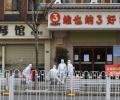
The Wuhan local administration earlier announced that people who are not quarantined and seeking special treatment or stranded in the city can leave in batches.
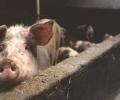
The study noted that humans are not protected from the G4 virus by the immunity offered by other human influenza vaccine strains, indicating that there is no preexisting population immunity to the virus.

China has reported a spike in COVID-19 infections in Zhejiang Province which registered 138 locally-transmitted confirmed cases stated to be that of new Delta strain "sub-lineage AY.4", prompting authorities to bar millions of people in the eastern province from travelling.
A whitepaper released by the Chinese government gave a lengthy explanation to refute the allegations of cover up and delay by Beijing on reporting the COVID-19 outbreak last year in Wuhan. United States President Donald Trump and leaders of several countries have accused China of not being transparent in reporting the deadly disease, leading to huge human casualties and economic crisis across the world.
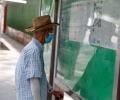
The Chinese capital reported 106 domestically transmitted COVID-19 cases since June 11 and a senior city official warned that the situation is "extremely severe" in Beijing where authorities have mounted massive containment measures including mass testing of about 90,000 people.

The authorities have mounted massive containment measures including mass testing of about 90,000 people

China's National Health Commission on Thursday said the country reported only four new confirmed COVID-19 cases on Wednesday, taking the total number to 82,862, while no death due to the disease was registered. The virus has claimed 4,633 lives in the country.

Shi explained that she and a group of researchers obtained samples of coronavirus on December 30 last year and performed high-throughput sequencing of the samples and the isolation of pathogens.
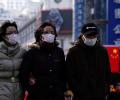
The vaccination, available at 48 designated clinics in 15 districts, began on December 24, targeting certain groups of people aged between 18 and 59 years, He Zhenyu, deputy director of the centre for disease control and prevention in Wuhan, told the media in Wuhan.
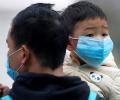
Monday also saw the new confirmed infections of COVID-19 outside Hubei reduced to a number lower than 100 for the first time, Mi told the media..
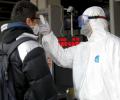
An outbreak of a pneumonia-like illness that started in the city of Wuhan in China has put health authorities on high alert around the world. The new coronavirus-named 2019-nCoV-is thought to have originated in the food market of the central China metropolis and has since infected more than 4,000 people worldwide.
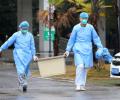
Common symptoms of the novel coronavirus (nCoV) strain, which has infected more than 300 people since the outbreak in Wuhan in December, include respiratory symptoms such as fever, cough, shortness of breath and breathing difficulties, the WHO said

It is a landmark in China's over two-month-long fight against the deadly virus as the country continued to report coronavirus deaths till Sunday, especially from the epicentre Hubei province.

The Chinese government on Saturday ordered the release of people detained over a host of coronavirus-related incidents, a day ahead of Beijing's plan to scrap its three-year-old stringently implemented zero-Covid policy.
India on Sunday opened a third hotline in view of 'large number' of phone calls from the Indians who are mostly students, the Indian Embassy in Beijing said.
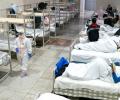
A 55-year-old from Hubei province could have been the first person to have contracted the viral infection on November 17 last year and cases rapidly began piling up since then, it said, without revealing the gender of the individual.
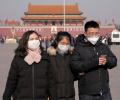
China's National Health Commission, (NHC) said on Saturday that 18 new confirmed coronavirus cases were reported in the country on Friday, including six domestically-transmitted cases in Beijing. Also on Friday, seven new asymptomatic cases were reported, taking the total number of such people in quarantine to 98, it said.

Why did the Chinese military take over the lab in Wuhan in end January? Did something go wrong? Claude Arpi glances at the mystery surrounding the origin of the coronavirus.

India lacks China's culture of collective discipline, so what will provide the glue for people to cooperate rather than follow their raw survival instincts? asks Ravi Bhoothalingam.
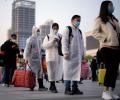
The move comes a day after China lifted the 76-day lockdown in Wuhan, where the pandemic originated. China's National Health Commission (NHC) on Thursday reported 63 new confirmed cases of the coronavirus, including 61 imported ones taking the total to 1,104 cases.
The Indian nationals, mostly students, research scholars and professionals are working in Indian and international companies in the Chinese province.

By Thursday, 830 confirmed cases of pneumonia, caused by the novel coronavirus (2019-nCoV), had been reported in 29 provincial-level regions in the country.

The massive earthquake in Sichuan struck at 9:19 pm (local time) on Tuesday and the epicentre was monitored at a depth of 20 km, state-run Xinhua new agency reported.
The government will also evacuate Indians on Friday from China's Wuhan city, the epicentre of the deadly Coronavirus, which has spread to at least 17 countries already.

Results from the first phase of the clinical trial of an Ebola vaccine suggests it is safe to use, Chinese scientists say.

'That way, it will be helpful for India because by April, temperatures will be in the late 30s and early 40s.' 'So, if we are able to sustain these 21 days, and go to that temperature zone, it will be a way of nature protecting us.'
How China's all powerful Communist party bungled the response to the coronavirus crisis.

The Union Health ministry put the number of positive cases at 82, eight more since Thursday night, which includes the woman and a 76-year-old man from Karnataka who became the country's first coronavirus fatality besides 17 foreign nationals, Health Ministry officials said.
